# Threshing Day Game: Dragon Types, Cards, and Size
Threshing Day Game: Dragon Types, Cards, and Size
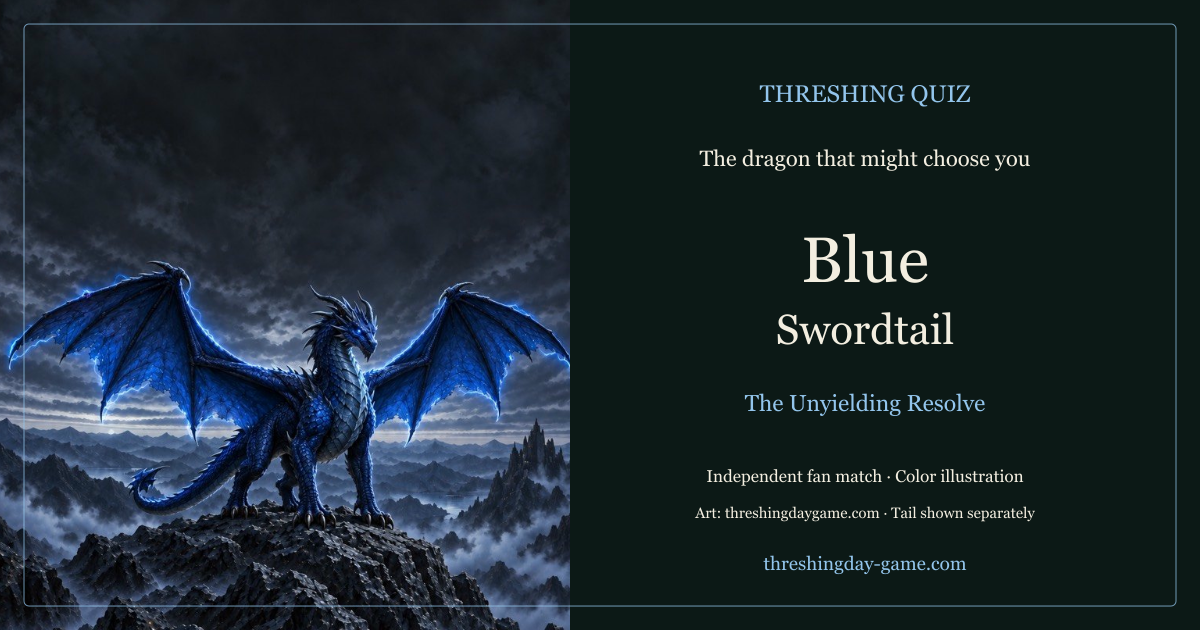
A dragon fills a result card, wings reaching almost from edge to edge. Another dragon sits inside a tighter portrait. It is tempting to read the first as the larger creature, even though the images may simply use different poses and crops.
If you have been searching for the Threshing Day game, the first questions are practical: where do you play, what dragon can you get, and how do you keep the card? Once the result appears, another question follows naturally: what does it actually tell you about the dragon's appearance and size?
Here is a guide to getting a result, understanding its fields, and making a useful visual comparison afterward.
Start with the experience you want
Threshing comes from Rebecca Yarros's Empyrean world: a dangerous trial where dragons choose riders. The recent Threshing Day story collection and the Dragonkind game brought that idea into renewed conversation. The author's book page describes thirteen stories around that shared day.
For a short browser adventure, open the threshing day game and select Begin the trial. You read encounters and make up to seven decisions, trying to reach the final dragon meeting. An attempt can fail early, and you can immediately begin again. No account or download is required.
If your priority is an illustrated match to share, follow the site's Threshing Quiz link. Its twelve questions lead to a colour-and-tail pairing, an explanation tied to your answers, and a downloadable card. Every completed quiz gets a match, and you can review your answers before revealing it.
That gives you a simple starting point: choose the adventure for a story with risk, or the quiz for a personality match and card. You can read the world guide afterward without memorizing every character first.
A dragon result contains several different kinds of information
Colour, tail type, personality interpretation, and physical measurements answer different questions. Keeping them separate makes a card much easier to read.
| Part of the result | What it helps you understand | What to look at next |
|---|---|---|
| Colour | The dragon's appearance and the description attached to that colour | The written explanation of the match |
| Tail type | A physical feature, such as a swordtail or clubtail | The separate tail description |
| Match explanation | How the quiz connects your choices with a partnership | The answers highlighted in that explanation |
| Artwork | Pose, atmosphere, and a visual impression of the dragon | Whether the image actually depicts the feature you are comparing |
| A measurement, if one is supplied | A particular dimension in a stated unit | Its source and what was measured |
The quiz uses six colours and five adult tail forms, producing thirty pairings. That does not mean thirty size rankings. A Blue Swordtail label, for example, identifies a colour and a tail; it does not provide a standing height in metres.
The quiz's colour portraits also do not depict every possible tail pairing. Use the tail description to understand the exact combination rather than assuming every detail in the portrait changes with the result.
This is useful when reading Dragonkind Threshing conversations, too. Someone may be discussing a colour, a named dragon, an encounter, or a completed bond. Check what the person actually recorded before adding details from a different context.
Can you tell how tall your dragon is from the card?
The result fields described here do not give a verified standing height for every dragon type. A colour description or dramatic illustration is not enough to calculate one.
Before drawing a comparison, choose the dimension you want:
- Standing height: a vertical distance from the ground to a defined point, such as the head or shoulder.
- Body length: a distance along the body, with clear endpoints such as nose and tail tip.
- Wingspan: the distance between wingtips when the wings are extended.
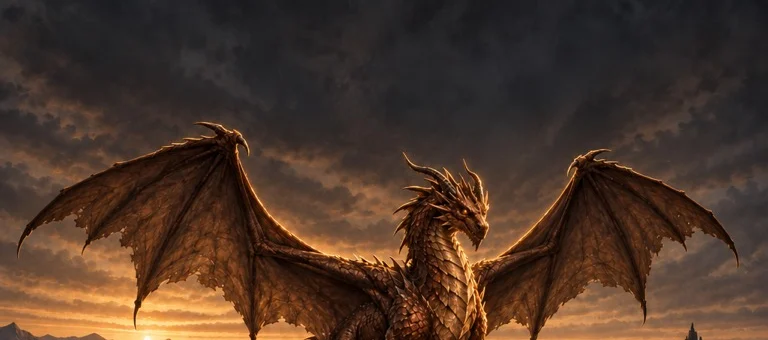
A wingspan and a standing height can use the same unit while measuring different things. Placing both on a chart labelled “height” would produce a neat-looking comparison with an unclear meaning.
Pose matters as well. A raised neck changes the highest point. Extended wings change the silhouette. Perspective makes a nearby head appear larger relative to the body. Even two portraits exported at the same pixel dimensions can show creatures at completely different scales.
If you want to compare two dragons by height, use the same definition and viewing angle for both. If you only want to compare their designs, equal-size cards are fine—there is no need to turn that layout into a physical measurement.
Build a comparison around the information you have
A useful chart begins with a source, a dimension, and a unit. If the source provides all three, you can convert the unit and compare like with like. If a measurement is missing, leave it unknown or clearly choose a value for a fan concept.
For example, imagine a passage describes a creature as twelve metres long. That figure belongs on a length comparison. It cannot be used as twelve metres of standing height merely because the chart is vertical. This is a measurement example, not a size assigned to a Threshing Day dragon.
For a creative composition, you can instead choose a human reference and explore an imagined scale. A 1.8-metre reference figure provides a convenient baseline; it need not represent a named book character. Label any invented dragon dimensions as concept values so the image explains your design rather than appearing to establish a lore fact.
CompareHeights lets you arrange people, objects, and custom images with entered measurements, then export the visualization. When using a dragon image, crop empty margins before scaling it and decide whether the image's full vertical extent matches the dimension you are entering. Wings raised above the head can otherwise make a “standing height” setting misleading.
A chart helps visualize the values you supply. The important work is choosing values and definitions that belong together. If you do not have a reliable measurement, a labelled design comparison may be more useful than a precise-looking numerical chart.
Keep the card and the comparison as two useful views
The result card records the pairing and its visual identity. A size chart explores a particular measurement or creative assumption. You do not need to fit every detail into one image.
On the quiz result page, choose a square or story-size card and optionally add a name. The square export is 1080 × 1080; the story format is 1080 × 1920. Check the preview before downloading, especially if you intend to share the image publicly.
A result link opens a general page for that dragon type. Your answers and optional card name are not included in that URL, so use the downloaded image when you want to share the personalized card.
If you played the seven-decision adventure, completed trials can also be saved in the current browser, up to thirty records, or copied as text. Saving another after the limit replaces the oldest. Keep a separate copy of a favourite result before clearing site data.
When posting a comparison, name the colour-and-tail pairing and state what the chart shows. “Blue Swordtail concept beside a 1.8 m reference figure” gives viewers enough context to understand an imagined scale. A broad “official dragon height chart” claim would need much stronger evidence.
Let the result guide the next question
A first result can lead to several interesting directions: comparing choices with a friend, reading the colour explanation, looking up the tail shape, or sketching a dragon beside its rider. None requires assuming that the biggest portrait is the biggest dragon.
For a community perspective after playing, Christina Pothen's Threshing Day reaction video is an optional next stop. It may reveal outcomes, so leave it until after your own first attempt.
The Threshing Day game gives you a reason to imagine a dragon partnership; careful comparison gives that image a clearer meaning. Start a trial or find the card-based quiz on the threshing day website, then keep the result's labels, the artwork, and any measurements distinct as you explore what your dragon might look like beside you.
Related resources
Explore more perspectives on the game, its presentation, and the player experience: